The Internet walled garden
How Discord and other closed platforms are hiding the Internet


In the early days of the internet, the greatest magic trick the web pulled off was allowing you to find your "tribe." Whether you were obsessed with obscure 80s synth-pop, vintage car repair, or niche programming languages, you could type a few words into a search engine and stumble upon a bustling message board of like-minded people. The internet was an open map, and communities were the easily discoverable cities within it.
Today, that landscape has drastically evolved. The sprawling, open forums of yesteryear are being rapidly replaced by a new paradigm: the walled garden. A massive chunk of the internet's collective knowledge and community culture has migrated behind the closed doors of platforms like Discord. While these real-time chat apps offer undeniable convenience, they are slowly eroding the foundations of what made online communities so vibrant and accessible in the first place.
Here's why the shift toward closed platforms might be quietly destroying the open web.
The Invisible Barrier to Entry
To a tech-savvy gamer or developer, hopping into a new Discord server feels as natural as breathing. But we often forget that the internet is for everyone, and closed platforms inherently raise the barrier to entry.
Think about the traditional forum experience. You clicked a link in your browser, you read through a thread, and if you wanted to participate, you made an account. The friction was almost non-existent. Closed platforms, however, demand a much higher toll. First, you have to somehow find out that a specific community's server even exists, and then you often need to know someone on the inside just to get an invite link.
Once you find a community, the hurdles continue. While browser versions exist, platforms like Discord heavily push users toward downloading a dedicated external application requiring decent hardware resources that not everyone has access to. For individuals who are older, less technically inclined, or simply hesitant to install unfamiliar software just to ask a single question, this is a massive deterrent. By requiring users to download an app, create an account, hunt down elusive invite links, and navigate a complex UI of channels and roles, we inadvertently hang a "Keep Out" sign for casual web browsers.
The Black Hole of Searchable Knowledge
Perhaps the most devastating consequence of the "Discordification" of communities is the death of searchability.
For decades, the internet functioned as a massive, public archive. If you encountered a highly specific bug in a piece of software or needed a guide on how to fix a leaking espresso machine, you just Googled it. More often than not, an old forum thread from 2012 would appear holding the exact solution you needed.
When a community moves to Discord, that collective knowledge falls into a black hole. Search engines like Google, Bing, and DuckDuckGo cannot index the contents of a private server. If someone solves a complex problem in a #help channel, that solution effectively ceases to exist for the rest of the world. To find it, a person would have to already know the server exists, join it, bypass the welcome screens, and try their luck with the platform's internal search bar.
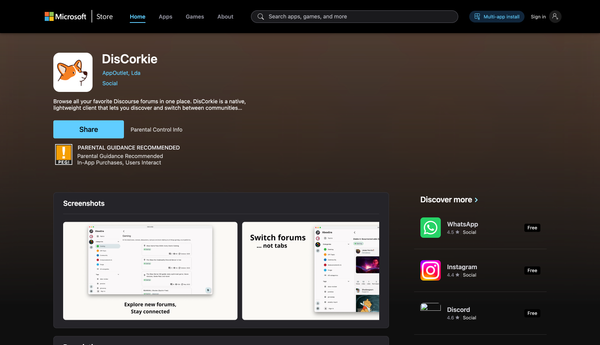
I experienced this firsthand not too long ago when I started diving into self-hosting. I had set up a small home lab to host a few applications. As a solo developer, any automation is incredibly welcome, so I was thrilled to find Postiz, a platform I could use to automate social media management for my company, AppOutlet, which develops DisCorkie and GameOutlet. During setup, however, I ran into some frustrating issues with the SSL certificate. Naturally, I went straight to their GitHub repository to look for a solution or open a help ticket.
To my surprise, I was instructed to post my question on their Discord server instead. I joined the server, poked around, and eventually found some other users who had already asked about and solved the exact same SSL issue. That entire roadblock could have been avoided—or resolved with a ten-second Google search—if those troubleshooting conversations had just taken place on GitHub or any other searchable platform.
By hiding our conversations, we are breaking the internet's greatest feature: the ability to stumble upon answers asynchronously.
When Secrecy is a Feature, Not a Bug
To be fair, the open web isn't the perfect solution for every single community. There are valid reasons why some groups prefer not to be found.
For communities centered around sensitive or legally grey subjects like white-hat hacking, emulation, or file sharing, being unsearchable by the general public and corporate entities is a massive benefit. Similarly, marginalized groups often rely on the invite-only, heavily moderated nature of closed chat apps to maintain safe spaces free from the trolls and harassment that plague the open web. For these specific communities, the walled garden isn't a trap; it's a necessary fortress.
Resurrecting the Open Forum
So, how do we bridge the gap? We don't have to go back to the clunky, outdated interfaces of the 1990s to build modern, sleek communities that remain open to search engines. There are incredible alternatives that offer the real-time feel of a social app while keeping your community indexed and accessible.
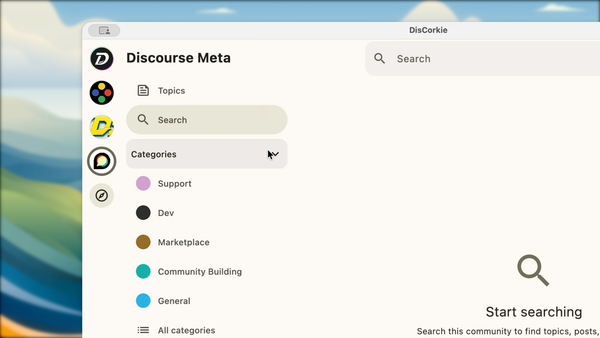
Discourse has emerged as a modern gold standard for community building, acting as a mailing list, a discussion forum, and a long-form chat room rolled into one mobile-friendly, heavily SEO-optimized package. For those looking for something lighter, Flarum offers a fast, two-pane interface that feels just as responsive as a single-page app. If real-time streaming is a priority, NodeBB matches the pace of modern chat apps while retaining the threaded, searchable nature of a classic message board.
Finally, for open-source projects and developer tools, GitHub Discussions is the perfect modern alternative. It keeps technical Q&A, ideas, and general chat right next to the code repository, ensuring every solved problem remains completely searchable and indexed by Google.
Conclusion
Ultimately, creating artificial barriers around your community throttles its potential. When you lock your discussions away where search engines can't find them, you cut off the organic flow of new users who might have stumbled upon your group while looking for an answer.
In the long term, siloing our knowledge behind private apps threatens to kill the very culture of the open internet. The right platform always depends on the subject of your community. When you need a private fortress, use one. But if your goal is to build a thriving, lasting knowledge base, it might be time to tear down the walls and open the gates back up.